Toronto Water Leak Detection | Find Hidden Leaks Fast
Toronto Water Leak Detection
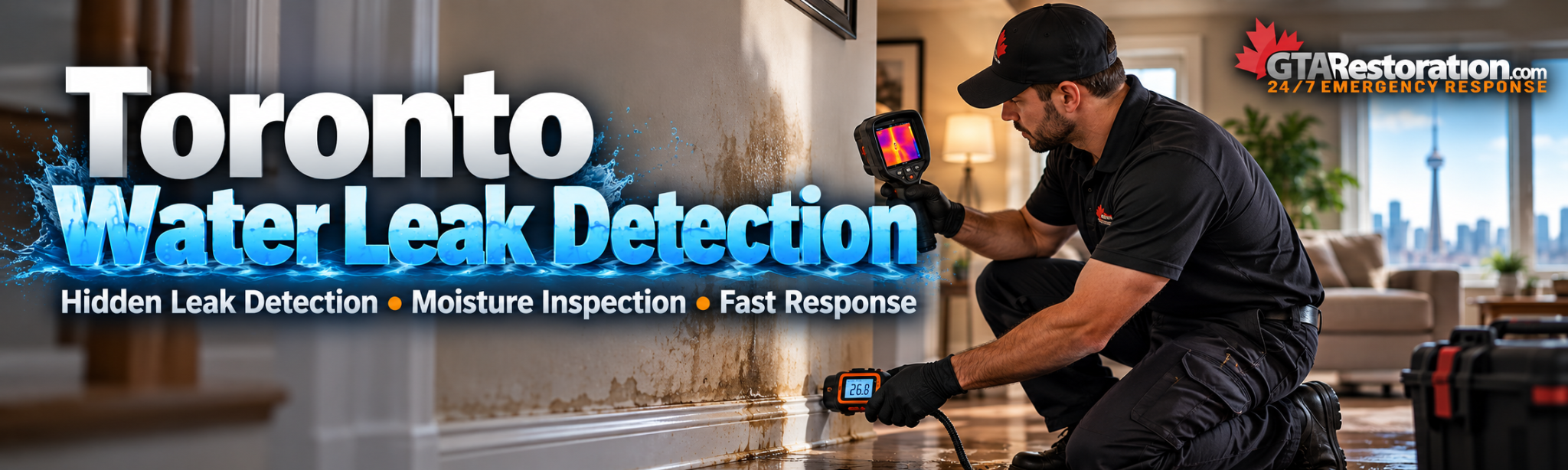
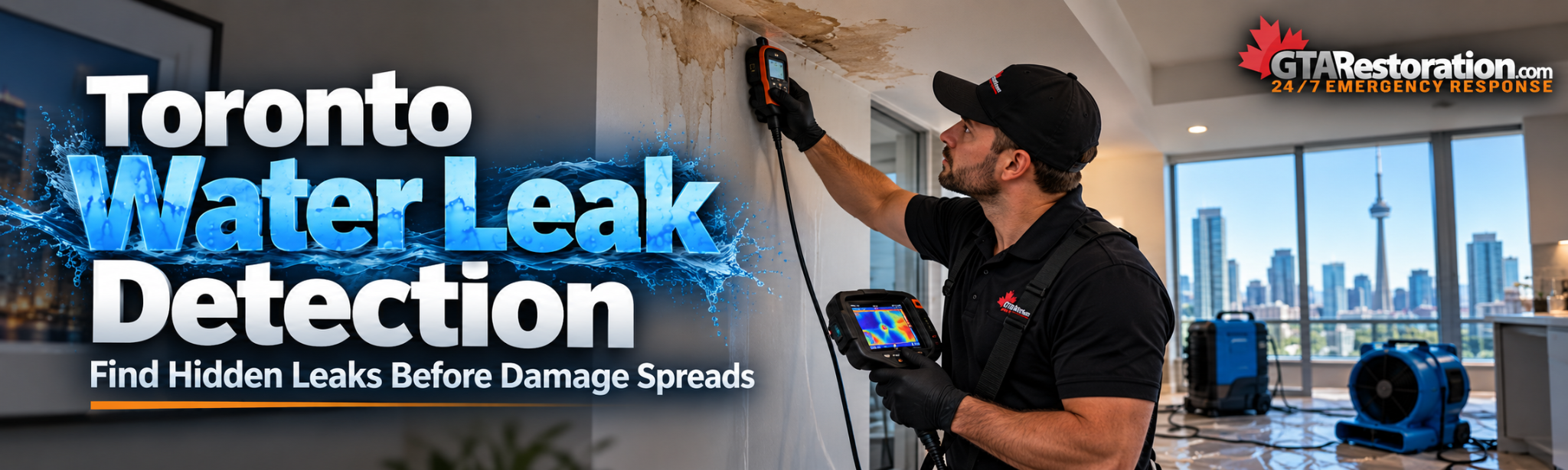
Toronto Water Leak Detection can help locate hidden plumbing leaks and moisture problems before they cause more property damage. For example, a leak may first appear as a ceiling stain, damp wall, peeling paint, warped flooring, musty odour, wet cabinet, or unexplained increase in water use.
GTA Restoration provides leak investigation for homes, condos, businesses, and managed properties in Toronto. During the inspection, our team can follow moisture patterns, check affected materials, use moisture meters and thermal imaging, and help determine where further plumbing repair or restoration may be needed.
Signs of a Hidden Water Leak
Some leaks create obvious dripping or standing water. However, others remain hidden behind drywall, under flooring, above ceilings, or inside cabinets for a long time.
Warning signs may include water stains, damp drywall, swollen baseboards, bubbling paint, warped flooring, recurring moisture, musty odours, or unusually high water use. Therefore, early investigation can help limit further damage.
Water Leaks Behind Walls and Ceilings
Water can travel inside a wall or ceiling before becoming visible. As a result, the first wet spot does not always identify the exact source.
Supply lines, drain connections, bathroom fixtures, roof leaks, and mechanical equipment can all create moisture that appears some distance away from the original problem. For this reason, a focused inspection can help narrow down the likely source before unnecessary demolition begins.
Bathroom and Kitchen Leaks
Bathrooms and kitchens contain many possible leak sources, including toilets, faucets, showers, tubs, drains, sinks, dishwashers, refrigerators, and supply lines.
Because cabinets and flooring can hide water, technicians may inspect surrounding walls, floors, ceilings below, and nearby rooms. In addition, moisture readings can help show whether water travelled beyond the fixture area.
How Leak Detection Works
Professional leak detection uses several clues rather than relying on one tool. First, technicians review visible damage and nearby plumbing. Next, they follow moisture patterns and compare affected materials with dry areas.
Moisture Meter Inspection
Moisture meters help identify damp drywall, ceilings, wood, flooring, cabinets, and other accessible building materials. In addition, readings can show how far moisture has travelled beyond the first visible stain.
As a result, technicians can better determine whether the property needs further investigation, drying, or restoration after the plumbing problem is corrected.
Thermal Imaging for Leak Detection
Thermal imaging can reveal temperature differences that help guide an inspection. For example, cooler or warmer areas may point technicians toward moisture, plumbing activity, insulation differences, or other building conditions.
However, a thermal camera does not see through walls and cannot prove that every temperature difference is a leak. Therefore, technicians should confirm suspicious areas with moisture readings, visual evidence, and other inspection findings.
Checking Your Water Meter
An unexplained increase in water use may indicate a plumbing problem. One simple check is to turn off indoor and outdoor water use and then look at the water meter’s flow indicator.
If the indicator continues moving while nobody is intentionally using water, further investigation may be needed. For additional guidance, Toronto property owners can review the City of Toronto guide to checking for household water leaks.
Leak Investigations for Condos and Businesses
Condo Water Leak Investigations
Water can travel between condo units through ceilings, walls, plumbing openings, shafts, and shared building areas. Consequently, an investigation may require access to more than one suite or common area.
Meanwhile, property managers, residents, plumbers, and restoration crews may need to coordinate access so technicians can follow the moisture back toward its likely source.
Commercial Leak Investigations
Offices, retail spaces, restaurants, warehouses, and other commercial properties can develop leaks around washrooms, plumbing lines, kitchens, mechanical rooms, fixtures, and water-connected equipment.
Commercial investigations may also need to consider operating hours, tenants, inventory, equipment, and access to neighbouring spaces. Therefore, finding the problem early can help reduce disruption and keep repair work focused on affected areas.
What Happens After the Leak Is Found?
Finding and repairing a leak stops the source, but it does not automatically dry the building. Water may still remain inside drywall, flooring, insulation, framing, cabinets, or ceilings.
Structural Drying After Leak Repair
After a plumber or appropriate contractor stops the leak, technicians can check the remaining moisture. Depending on the conditions, drying may involve dehumidifiers, air movers, moisture monitoring, and other equipment.
For more complex projects, our Specialty Drying services can help address moisture trapped in building materials.
Mold After a Hidden Leak
Slow leaks can keep materials damp for an extended period. Consequently, persistent moisture may create conditions that support mold growth behind walls, under flooring, or in other concealed areas.
Fixing the plumbing source does not remove mold or moisture damage that already exists. If you see or suspect mold, review our Mold Removal and Remediation services.
Documenting Water Damage
Photos, moisture readings, inspection notes, repair records, and drying documentation can create a useful record of the loss. In addition, these records can help property owners understand which areas became wet and what work followed.
GTA Restoration provides Toronto Water Leak Detection for hidden plumbing problems, wet walls, ceiling moisture, flooring damage, high water use, and other suspected leak conditions.
Our team can investigate moisture patterns and document affected materials. Afterward, we can help determine whether the property also needs structural drying or water damage restoration.
Suspect a Hidden Water Leak in Toronto?
GTA Restoration provides leak investigation, moisture detection, structural drying, and water damage restoration for Toronto properties.
Find the source early and address wet materials before the damage spreads farther.
Water Leak Detection and Moisture Inspection in Toronto
Toronto Water Leak Detection can help property owners locate hidden plumbing problems and understand how far moisture has travelled. GTA Restoration assists homeowners, condo owners, property managers, and businesses with moisture inspection, leak investigation, and water damage assessment.
A visible stain does not always reveal the true source. Therefore, technicians may need to follow water through walls, ceilings, flooring, cabinets, plumbing openings, and nearby building materials.
Hidden Plumbing Leaks
Small plumbing leaks can remain concealed behind drywall, ceilings, cabinets, and floors. For this reason, technicians follow moisture patterns and inspect nearby plumbing instead of assuming that the first visible stain marks the source.
Moisture Meter Inspection
Moisture meters allow technicians to compare damp materials with surrounding areas. In addition, these readings can help show how far water has travelled and whether the property needs further investigation or structural drying.
Thermal Imaging
Thermal imaging can highlight temperature differences that may guide an investigation. However, technicians should confirm suspicious patterns with moisture readings, visual evidence, and plumbing conditions before reaching a conclusion.
Bathroom and Kitchen Leaks
Sinks, toilets, showers, tubs, drains, supply lines, dishwashers, refrigerators, and other fixtures can develop leaks. As a result, technicians may need to inspect cabinets, floors, walls, ceilings below, and nearby rooms.
High Water Consumption
An unexplained increase in water use can sometimes point to a plumbing problem. For example, checking the water meter while fixtures remain off may provide useful information about continuous water flow.
Condo Leak Investigations
Water can move from one condo unit to another through ceilings, walls, plumbing spaces, and shared building assemblies. Consequently, the investigation may require access to neighbouring suites or common areas.
Commercial Leak Investigations
Commercial properties may develop leaks around washrooms, kitchens, plumbing lines, mechanical spaces, and water-connected equipment. Therefore, early investigation can help reduce disruption and focus repairs on the areas that actually need attention.
Drying After Leak Repair
Repairing a pipe or fixture stops the source but does not automatically dry wet materials. Afterward, technicians can check drywall, flooring, wood, insulation, cabinets, and ceilings for remaining moisture.
Depending on the conditions, dehumidifiers, air movers, and moisture monitoring may help complete the drying process.
Mold and Long-Term Moisture
Slow leaks can keep hidden areas damp for extended periods. As a result, persistent moisture may create conditions that support mold growth.
Therefore, property owners should address both the plumbing problem and any resulting material damage.
Leak Investigation Documentation
Photos, moisture readings, thermal images, inspection notes, and repair records can help document what technicians find. In addition, these records can make the next stages of repair and drying easier to understand.
Need Help Finding a Water Leak in Toronto?
Contact GTA Restoration for hidden leak investigation, moisture checks, structural drying, and water damage restoration.
Nationwide, Local Pricing
GTA Restoration offers local flood & water damage repair, mold removal/remediation, asbestos removal/abatement, fire/smoke damage repair services and much more.
Quick answers about hidden plumbing leaks, moisture meters, thermal imaging, condo leaks, and structural drying.
What are common signs of a hidden water leak?
Water stains, damp drywall, peeling paint, warped flooring, swollen baseboards, musty odours, and higher water use can all point to a hidden leak. Therefore, recurring moisture should not be ignored.
Can thermal imaging find a water leak?
Thermal imaging can help identify temperature patterns that guide an investigation. However, technicians should confirm suspicious areas with moisture readings and other evidence.
Can a water leak be behind a wall?
Yes. Supply lines, drains, fixtures, and other plumbing can leak inside wall cavities. As a result, water may appear some distance away from the actual source.
Can a high water bill mean I have a leak?
It can. However, increased use, toilets, appliances, outdoor watering, or other factors may also raise consumption. For this reason, checking the water meter can provide more information.
Do condo leaks require access to other units?
Sometimes. Water can travel between units through ceilings, walls, plumbing openings, and shared building areas. Consequently, coordinated access may help trace the source.
Do wet materials still need drying after the leak is fixed?
Yes. Stopping the leak only prevents new water from entering. Afterward, drywall, flooring, insulation, wood, and other materials may still require drying.












You must be logged in to post a comment.